

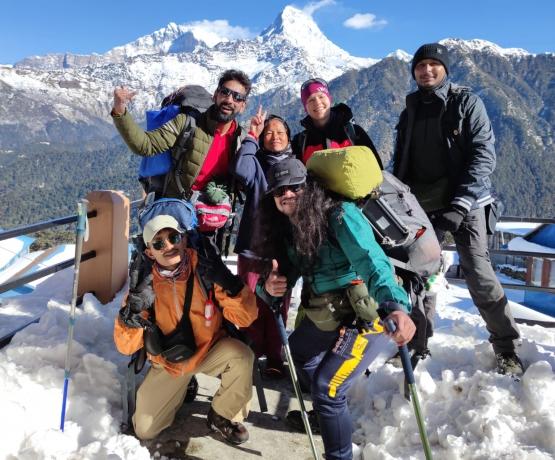
The vertically rising landscape, ranging from 70 m to the top of Mt Everest, makes the small country of Nepal varied in climate zones. Winter in Nepal prevails from December to February. Traditionally, the winter months are less popular among travellers as Nepal was long known for trekking. Nevertheless, winter has moderate temperatures with clear skies and warm and sunny days for cultural tours, spiritual journeys, and hiking.
The two most popular destinations, Kathmandu and Pokhara, are in the subtropical middle hills. The UNESCO Heritage sites of Chitwan and Lumbini are in the tropical plains closer to India. Winter is also a perfect time for short treks and day hikes around Kathmandu and Pokhara valley, which have warm and comfortable accommodation in the serenity of nature.
Winter months have clearer days with moderate temperatures for hiking and cultural tours. Nights are a bit chilly but are manageable with warm clothes and cozy accommodations with proper heating facilities.
In this blog, we will talk about the best Nepal treks and tours for winter with travel tips.
Best Nepal Tour for winter
A week's tour of Kathmandu, Chitwan, and Pokhara is the best Nepal tour for winter. The tour known as the golden triangle tour of Nepal gives a glimpse of Nepal's exquisite culture, nature, and wildlife while staying in the subtropical zone. It doesn't show at this altitude, but the snowfall in the higher Himalayan peaks makes it picturesque. Those who have more time can also include Lumbini, the birthplace of Buddha. Listed as UNESCO heritage sites, Lumbini is developed into a sacred park with monasteries from around the world, leading to the preserved ancient temple ruins and a pillar with an inscription dating back to the 3rd century BC. Similarly, spending a night in the popular hill stations like Nagarkot, Bandipur, and Sarangkot allows travellers to be in the serenity of nature and immerse themselves in the village life away from big cities.
All of the above places are must-visit tour destinations in Nepal as they are in tropical to temperate zones where it doesn't snow.
Short treks for winter
Since most of the winter days are sunny with crisp skies, it is the best time for short treks in the foothills of the Himalayas. The only downside of the trek is cold nights, which could be managed with the availability of comfortable lodges with a bed and room heating. The Ghorepani – Poon Hill Trek, Ghandruk Circuit Trek, Everest Cultural Trek, and Pikey Peak treks are the most popular winter treks. These treks dwell between the altitudes of 1,100 m to 3,000 m based on warm teahouses. Depending upon the time of the year, the higher elevation of the trek may have snow, but the snow makes it even more exciting and picturesque. While the Ghandruk trekking route stays in the lower altitude, the Pikey Peak trek crosses the pass of 4,200 m, making it the most adventurous short winter trek.
Tea Houses are warm and cozy with heated dining. Lodges in Annapurna and Everest have more comfortable rooms with en-suite bathrooms and heaters.
Spiritual tours in winter
Historically, the winter months are popular among Himalayan Buddhists to go on a pilgrimage tour of Kathmandu, Lumbini, and other sites in the warmer southern plains. These places see increased numbers of pilgrims in their traditional attire, spinning prayer wheels and chanting Mantras. The presence of the Himalayan people and their ritualistic practices make spiritual tours of Nepal more meaningful during the winter months.
Most of the pilgrimage sites and ancient temples are in the tropical and subtropical zones, making winter the best time for the journey.
The Buddhist pilgrimage tour of Nepal is the most popular tour to take in winter. The tour visits spiritual sites around Kathmandu and Lumbini. The ancient stupas, meditation caves, and monasteries of Kathmandu have been a center for practicing and learning since the 5th century. Nepal is believed as a place where the 8th-century master Padmashambhava (Guru Rinpoche) attained enlightenment. The Maratika, English, and Asura caves are popular as his meditation ground.
Similarly, the Lumbini Buddhist circuit tour includes sites of reverence beside the birthplace of Buddha, which takes about 4 days to visit. Ramgram Stupa (only unopened Buddha relic stupa out of the first eight), Tilaurakot palace ruin (where Buddha spent 29 years as prince Siddhartha), Kudan monastery ruin (where Buddha stayed several times on homecoming after his enlightenment), Niglihawa (birthplace of Kanakmuni Buddha), Gotihawa (birthplace of Krakuchandra Buddha) are some of the sites to visit.
Additionally, thousands of Hindu visits the Pashupatinath temple, Halesi Mahadev cave, Manakamana, and other sites which are commonly revered by both Hindus and Buddhists.
Everest and Annapurna in Winter
People still trek to Annapurna and Everest Base Camp during the winter months. The Teahouse remains open along the way throughout the winter. The trails are marked and well-maintained. With proper preparation and equipment, it is possible to trek to both base camps for those with more cold tolerance.
Nepal Travel tips for winter
- If a grueling multi-day trek is not your style and the above-mentioned activities tempted you, consider travelling to Nepal in winter. Fewer tourists and low-season prices are the benefits of travelling in winter. Here are some travel tips to enhance your winter travel experiences.
- If you are flying within Nepal, take an early flight as flights may be delayed and cancelled in the late afternoon because of fog and low clouds.
- Cold waves may affect the visibility and cause bad weather for a few days during the winter months in Lumbini and Chitwan National Park. Get a weather update and keep your plan flexible with enough time to drive in case.
- Winter is the peak tourist season for Lumbini, the birthplace of Buddha and the Buddhist circuit tour. So book your logistics well in advance.
- It may snow at altitudes above 2,000 m during the months of January and February. However, it is still possible to trek as the snow is less than a foot. It is fun, and the scenery becomes picturesque with more snow on the Himalayas. The trail will be more slippery. So be prepared with appropriate equipment.
- Trekking trails and major tourist destinations get busy for a brief time during the Christmas and New Year holiday. So book your trek and tour in advance if you are travelling during this time.
Final Words!
Winter travel in Nepal offers the best treks and tours in the foothills of the Himalayas, away from the foot traffic of peak season. The fresh air, moderate temperature, and crisp skies provide perfect conditions for short treks or venturing into life-changing spiritual tours. Scenery becomes more picturesque in the foreground of freshly snowed Himalayan peaks and foothills. Winter travel is also culturally enriching, as a few of the interesting festivals occur during the winter months.
So choose your itinerary wisely and pack perfectly to beat the chilly nights. The reward of sightseeing and hiking away from the bustling crowds of the peak season is fantastic.