

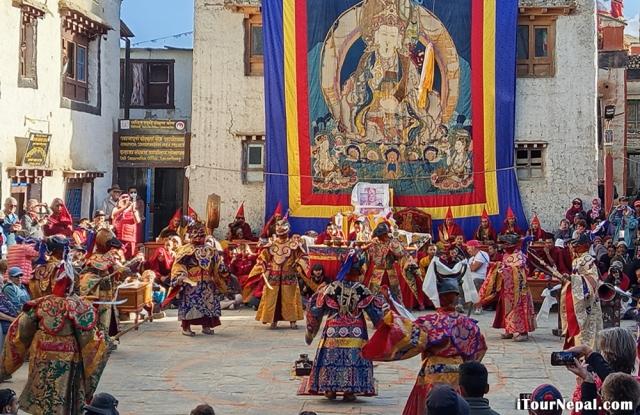
May is the peak of the Spring flowering season in the trans-Himalayan region of Nepal. The comfortable temperature and bright days transform the villages of Upper Mustang into a cultural tapestry rich with vibrant festivals and breathtaking landscapes. The three-day-long mask dancing festival celebrated in the walled city of Lomanthang is the most popular festival in the Himalayas. The festival makes the villages and monasteries of Upper Mustang livelier with traditional customs and ceremonies.
For nature and culture lovers, the Upper Mustang Tiji Festival Tour offers a unique opportunity to experience the cultural mosaic of medieval Tibet, the stunning view of the Himalayas, and an arid yet colorful landscape.
The Tiji Festival: A Tradition of Hope and Renewal
The Tiji festival is one of the oldest Tibetan Buddhist festivals celebrated in its place of origin. The festival is celebrated in commemoration of the mythical battle of Buddha Dorje Jono, to save the kingdom from demonic forces. Rooted in Tibetan Buddhist beliefs, the festival features a series of colorful rituals and mask dances presented by local monks with enchanting music. A monk from Chode monastery meditates and fasts for three months before enacting the Buddha with his mystic steps in elaborate costumes and masks. Monks also present several dances representing Dharma protectors and animals like tiger, leopard, deer, snake, and Garuda representing various concepts, from powerful spirits and demons to the symbolic struggle of good versus evil. The festival not only helps to foster community bonding, but it also allows them to express their spiritual beliefs and share this rare culture with the world.
The Tiji festival occurs in May, even though the exact date might change, as it relies on the Tibetan calendar that follows the cycle and phases of the moon. With locals dressed in traditional attire, feasts of traditional meals, monuments repainted, and monks chanting, the festival season is the best time to observe the rich culture of Mustang.
Traveling to Upper Mustang: Journey matters!
Gone are the days when travellers had to engage in a grueling trek for weeks to get to this trans-Himalayan Tibetan bastion. Now it is only a 238 km scenic road trip from Pokhara. As you cruise on the snaking road, an awe-inspiring vista unfolds at every turn.
The journey starts from the sub-tropical mountains of the lesser Himalaya with ample waterfalls, gushing white water, terraced fields, charming villages, and lush forests often coming to a Himalayan viewpoints. The road then climbs gradually upstream Kali Gandaki Valley, wedged between Dhaulagiri (8,167 m) and Annapurna (8,090 m), which makes it the world's deepest gorge.
As we enter the Mustang district, the scenery changes from verdant southern slopes to arid, windswept valleys with snow peaks in the backdrop. There are several interesting places to explore in the Lower Mustang, which makes it worth spending a couple of nights before heading to Upper Mustang. Visit the Bon villages and monasteries of Naurikot, Lubra, and Semten Thagyaling Bon Monastery. The traditional Thakali village of Marpha is famous as an apple paradise. Walk down its narrow, cobblestoned alleyways to observe traditional stone and wood houses with mud roofs bordered with stacks of wood and cross the suspension bridge to the Tibetan refugee camp. It is also worth a drive to Muktinath, which is one of the biggest pilgrimage sites for Hindus, Buddhists, and Bon. While the altitude of 3,800 m provides an overview of the Kali Gandaki valley with peaks of Annapurna and Dhaulagiri in the backdrop, the temple complex features Buddhist monasteries and Hindu temples.
Upper Mustang is famous for its colorful landscape, intact Tibetan Buddhist culture, mystic monasteries, and sky caves. Drive past the charming mud villages marked by fluttering prayer flags, walls of stones carved with mantras, Chortens, and entrances protected by Mandalas and animal skulls. The wind-carved cliffs colored in different minerals appear bewildering. Visit the cave monastery of Chungsi Rachung Cave, Luri, and Nifu, which have mystical self-arisen images, mural paintings, and other artifacts. While many of the 10,000 sky caves are inaccessible, a few are available for tourists to visit. Shija Zong cave, Konchok ling, and Rancholing Caves are a few caves with murals and artifacts open for visitors. Besides those, the Upper Mustang is still sustaining the self-sufficient medieval Tibetan lifestyle where they still practice polyandry, sky burial, Tibetan medicine, and Lamaism in day-to-day life.
Mustang road trip with hiking
For those looking to extend their adventure, a longer tour combined with day hikes and side treks is a perfect option. Instead of trekking on the dusty dirt road, a road trip could be combined with hikes and short treks in the pristine territories of Mustang. These hikes go off into the pristine Yak pastures, cave monasteries perched on the cliffs, or nomadic villages and come to view points offering far-reaching views of Mustang and snow peaks.
A Unique Perspective on Adventure and Culture
While the Tiji Festival brings hundreds of visitors to the walled city of Lo Manthang, it is important to respect the local culture and environment. Increased tourists during the festival causes a shortage of accommodation and thus a price hike. It also makes it chaotic with hundreds of vehicles and motorbikes navigating the delicate environment. Travelers express mixed feelings about the influx of tourists during the festival. While it generates the most needed revenue from tourism, it also makes the experience more touristy rather than immersive for travellers, due to a lack of cultural interaction and opportunities to engage with the host. Furthermore, the increased carbon footprint and waste from imported beverages and packaged foods negatively impact the fragile ecosystem. For spiritual seekers, the festival is a unique opportunity to witness the 300-year-old Vajrakilaya practice. Maintaining a balance between cultural preservation and tourism is crucial for the region's sustainability.
Moreover, the remoteness of Upper Mustang ensures that its pristine landscapes remain largely untouched. Visitors often describe the experience of exploring ancient caves or visiting remote monasteries as transformative. The serenity of the high-altitude desert, combined with the excitement of the festival, creates an almost surreal experience.
Conclusion: An Unforgettable Journey Awaits
Participating in the Tiji festival transcends a mere cultural experience; it is a journey into resilience, spirituality, and mindfulness. For those passionate about nature and adventure, the Tiji festival tour is a unique opportunity to explore the remote corner of the Himalayas and embark on a kaleidoscopic tour of Nepal. Whether one chooses to travel the scenic routes from Pokhara for a brief getaway or embarks on a more extensive trekking expedition, the stories of Upper Mustang promise to leave a lasting impression. As the festival approaches, the call of the mountains and the rhythm of traditional dances beckon travelers to partake in this extraordinary celebration of life and heritage.